How to Make the World New with Your Mouth, Part One
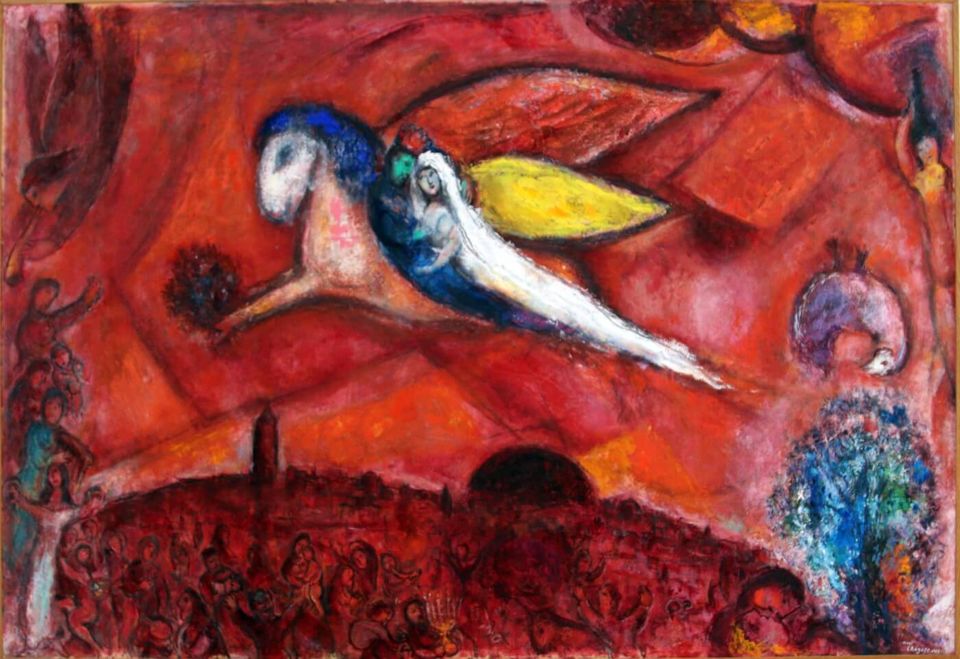
CS Peirce taught how semiotics related to ontology, or put more mystically, how our words become flesh. Peirce's semiotics can be related to the history of mysticism to show how his notion of "creative evolution," which he called "agapism," worked. In Part One of "How to Make the World New with Your Mouth," we'll try to fill in some of the background metaphysics necessary to follow Peirce's radical form of semiological creationism.
Peirce's notion of "Hypostatic Abstraction" was formulated to reflect the "Hypostatic Union" of the history of Christian theology. Both relational schemas reflect the necessary dependence that oneness has on multiplicity and that multiplicity has on oneness, which can also be formulated as the dependence of self on other(ness), or presence on absence. The immediate, given oneness of Peircean "Firstness" flows into the relational, cause-and-effect, self-as-other twoness of "Secondness" generating the incarnate trinity of the "Thirdness" that is the Hypostatic Abstraction of the appearance of "thirds" (phenomenal objects), which comprise Peirce's semiological ontology of the Firstness of first person, subjective experience.
Member discussion