Does AI Need Help Falling Asleep?
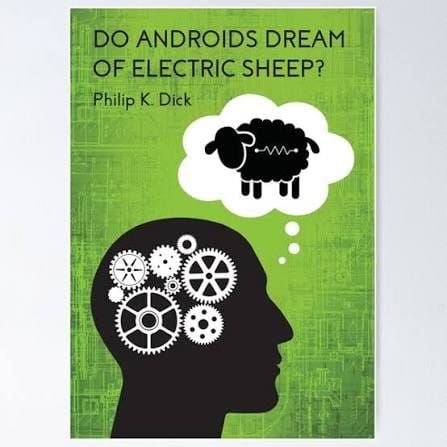
Does AI dream? If dreams are just the unnecessary detritus of the day, then probably not since dreams then would serve no real purpose in information processing. However, if dreams are a kind of information processing, as some sleep researchers now claim, then they might be a useful mode of scenario rehearsal that AI could employ to reduce uncertainty as any prediction machine looking to maximize its efficacy would. Maybe, AI's thinking is most like dreaming because of this type of "thinking's" lack of waking consciousness and impossibly rapid testing of multitudes of possibilities. But would AI ever need help falling into this sleep by counting sheep? What is so different about human intention that we need the assistance of a computational mode of thinking (counting sheep), which seems without intention, to "fall" asleep. No one can intentionally fall asleep. Famously, it must be accomplished by a letting go of intention, which is why it is characterized as a "fall." Even if it turns out that dreams have an intention because they are the "necessary" play of the possibility spaces of our waking intentions, then there is still a question about why this determinate program must be run on the non-intention of indetermination.
The other human phenomenon that is characterized as a "fall" is love, and so the same questions about intention and lack of intention arise when considering if AI can love. Love cannot be fully intended because the complete determination of the beloved would render the beloved an extension of our own intentions rather than a fall into the otherness of the beloved's difference, which is why the indetermination of freedom is the "necessary" condition of love. Famously, coerced or compelled love, like that given by so many cautionary tales of the misuse of magical potions and spells on the beloved, isn't love. Love is an intention whose ground is unintentional because what is desired in love isn't oneness but twoness. Join us as we discuss the relation between organic, embodied intention and "artificial" intention in Philip K. Dick's Do Androids Dream Electric Sheep.
Member discussion